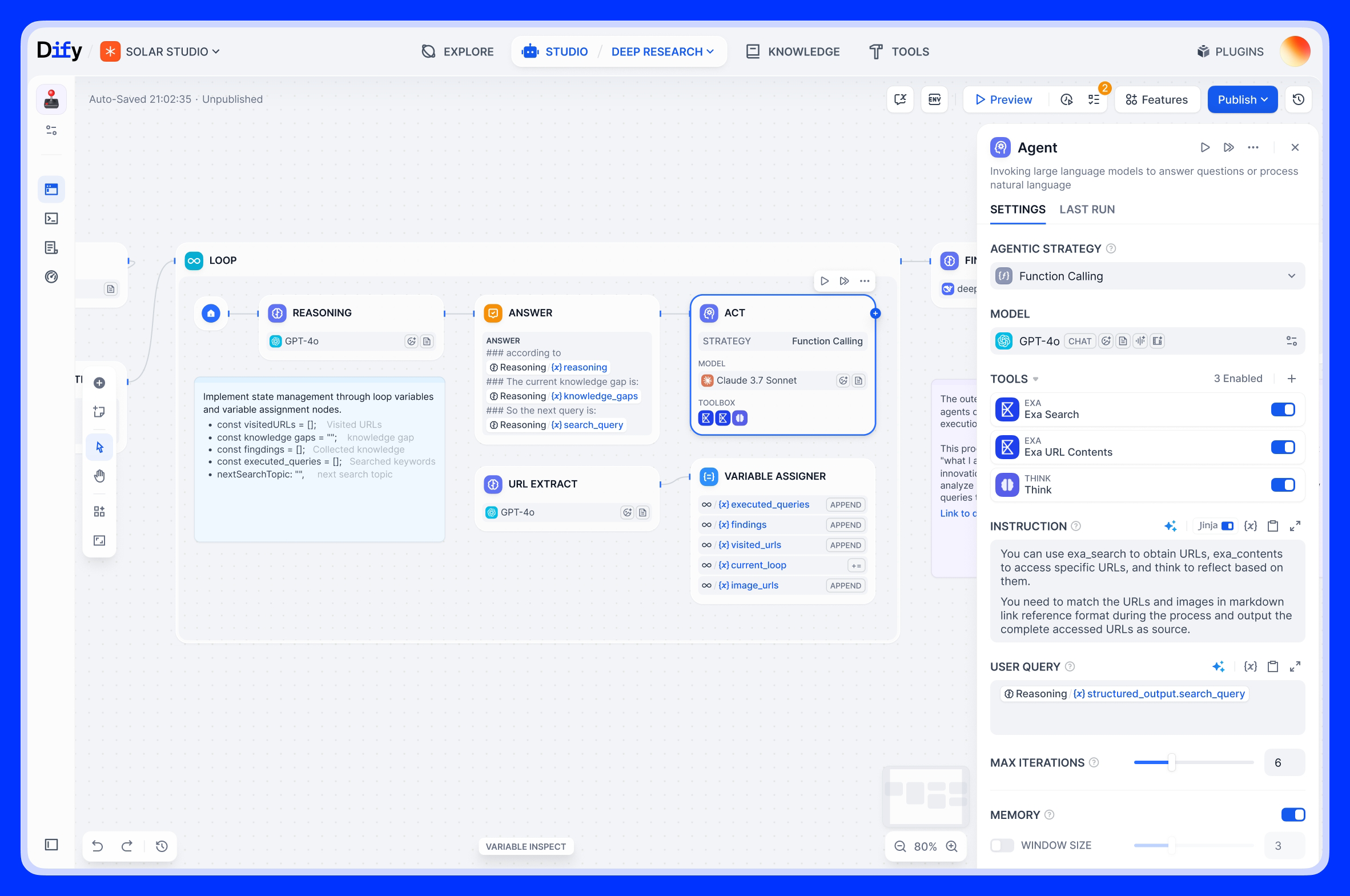

Dify 1.20.0, published November 18, adds OpenTelemetry export, knowledge-file scanning and other changes to its source-available application platform. The release is also a configuration migration: operators should not infer that replacing an image activates every advertised control.
File scanning is an opt-in path
The notes say scanning is disabled at deployment level by default and must also be enabled for each knowledge base. Once configured, the default policies block files when scanning is unavailable or a file cannot be scanned.
Our analysis is that a control needs to be evaluated in the state in which an application actually runs. Its presence in a release announcement does not establish that a particular deployment enabled it, connected the intended scanner or handles a failure as expected.
It is also important to keep the questions separate. A malware scan does not establish that a document's assertions are correct, that its content is appropriate for a particular workflow or that a model should follow instructions found inside it. Different checks address different kinds of failure.
A trace export needs a working destination
The OpenTelemetry provider supports OTLP over HTTP with protobuf; the release explicitly excludes gRPC. The update also changes the Langfuse integration around its legacy ingestion endpoint.
Observability is useful only when the resulting records reach the intended system with enough context to explain what happened. An export setting is not by itself proof of complete traces. Our view is that evaluating the path should include a failed request and an interrupted operation, not only a successful demonstration.
Configuration and worker state are part of the upgrade
The documented migration retires Docker's shared.env loading in favor of api-worker.env, updates public URL configuration and requires the normal database migration chain. Community Edition also needs the listed Evaluation-related database revisions even though it does not expose that feature.
New human-review delivery capabilities are included, but legacy Human Input nodes are not automatically migrated. The notes also distinguish a frontend flag from server-side work already in progress. Hiding an interface should not be treated as cancellation of an operation.
The repository's license has additional conditions
The tagged license is a modified Apache-2.0 arrangement with conditions concerning multi-tenant operation and removal or modification of frontend branding. These are existing terms, not a new license change announced in 1.20.0. Calling it unmodified Apache-2.0 would omit material restrictions.
Our Dify source profile records that qualification. We reviewed release and license materials without installing the platform, changing credentials, connecting a scanner or certifying an application's security.
EXPLORE THE SOURCE
Projects in this story
GitHub repositories
- langgenius/dify ↗View project details
Primary-source reporting with original editorial analysis. No software installation, paid API call, local inference, deployment or independent performance/security test performed.