
OpenAI’s November 20 Codex 0.171.0 CLI release enables its terminal workspace by default, adds navigation and preview features, and repairs several thread-state and permission-handling cases. This is a report on the open-source client release, not a claim that our installed environment has been upgraded.
The notes describe searchable document and image previews, subagent transcripts and configurable undo/redo behavior in the non-Vim composer. They also add remote-session controls, but using those features still requires an appropriately configured environment and access.
Directory changes should not reconstruct the permission policy
The permission-profile change preserves the selected profile and its configured workspace roots when the working directory changes, while updating the runtime workspace roots. The contributor describes a regression check for the expected write boundaries.
That is narrower than a general assertion that every permission decision is now correct. We inspected the change and its stated test scope without running the regression tests or attempting a sandbox escape.
An old turn’s completion should not cancel a new turn’s approval
A separate thread-state repair concerns a terminal event arriving after another turn has started. The app server tracks the latest started turn so a late completion does not cancel the newer turn’s pending approval.
The practical distinction is between the state of a thread and the lifetime of one operation. A finished operation should not be allowed to overwrite a newer decision that is still waiting for the user.
Our analysis: continuity includes state, not just text
An agent interface can preserve the visible conversation while still mishandling an unsent draft, an approval or the active permission profile. Those details affect whether the user can understand what the system is about to do and which context governs it.
That makes state-transition repairs worth examining alongside a more visible interface redesign. A useful evaluation should include switching threads, resuming interrupted input and receiving events out of order, rather than only following a clean demonstration from start to finish.
The release also updates the hosted-model catalog. A catalog entry is not proof of account eligibility, free usage or downloadable weights. It should not be confused with the license for the client itself.
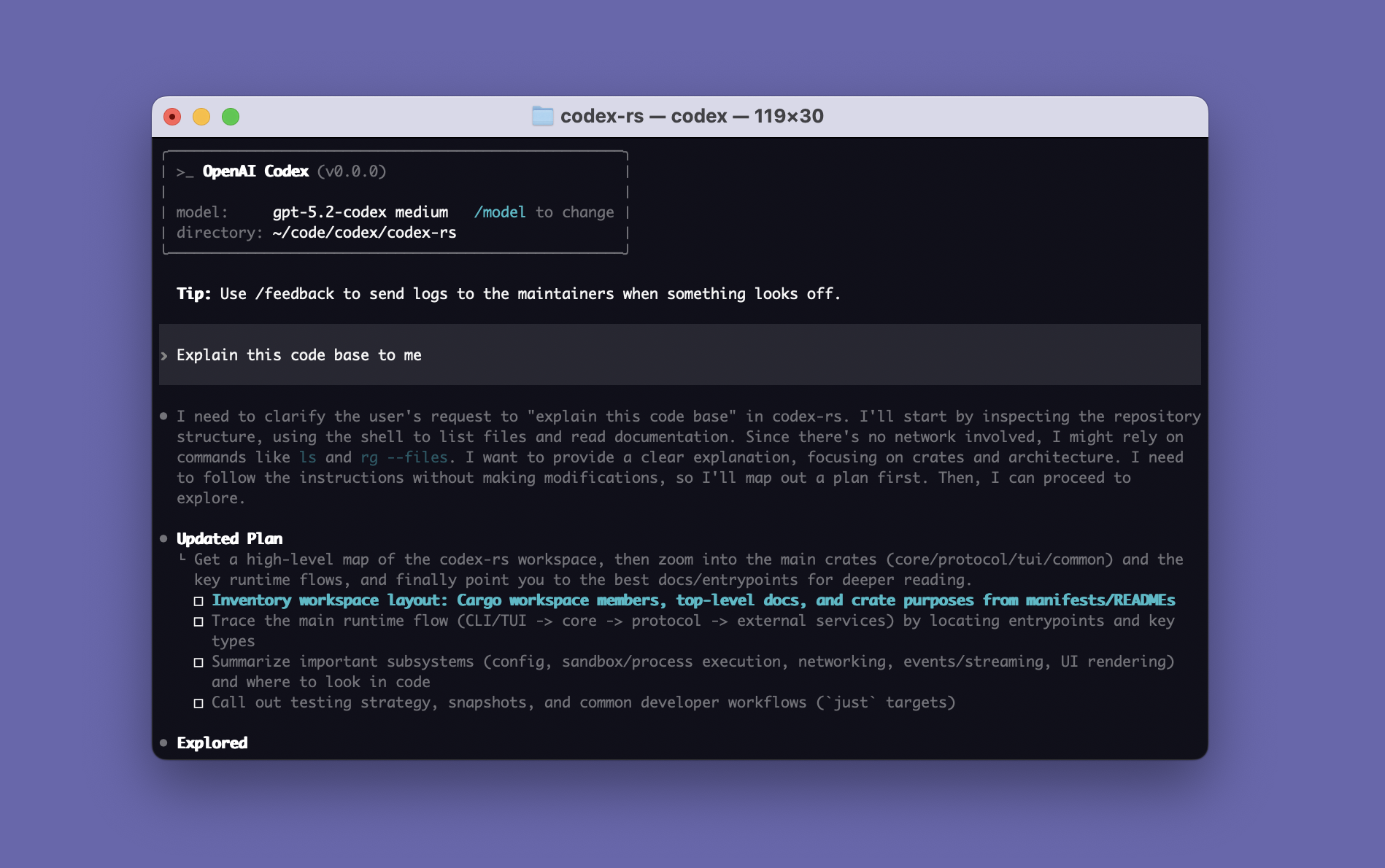
Our Codex repository profile links the Apache-2.0 source. We did not install the release, enable remote access, pair a device or change credentials. The accompanying official illustration is older project background, not a screenshot of the new workspace.
EXPLORE THE SOURCE
Projects in this story
GitHub repositories
- openai/codex ↗View project details
Primary-source reporting and original editorial analysis. No installation, model inference, paid service call, security test or independent benchmark performed.