
AWS has published a distributed KV-caching skill for coding agents, covering evaluation, configuration and troubleshooting of an ElastiCache-backed inference cache. The November 20 post links the implementation in the Agent Toolkit for AWS.
The skill targets the key-value attention state used during prompt processing. It is not an answer cache, semantic-search cache or a way to extend a model's supported context. Reusing compatible prefix state can avoid computing that state again when a conversation resumes on another server.
Measure the traffic before buying a cache
The skill source puts fit and cost checks ahead of resource creation. A workload with little repeated context, short prompts or already effective local caching may not benefit enough to pay for another tier.
AWS cites potential cost and first-token-latency reductions from its earlier benchmarks. Those are publisher results, not expected improvements for every application. Freed GPU time becomes an economic saving only when it supports more useful traffic or a smaller fleet.
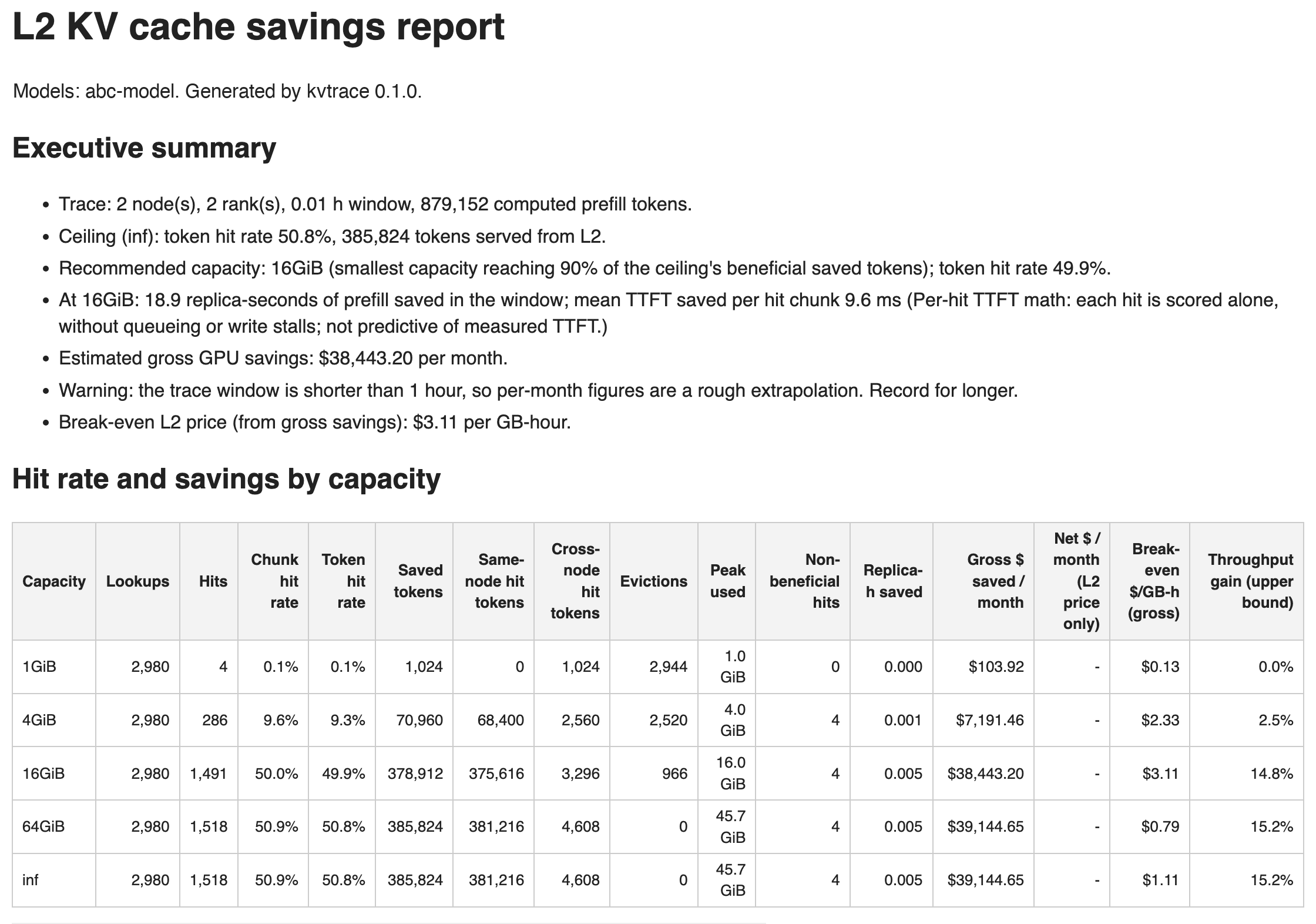
The associated KVTrace source records engine cache events and replays them against candidate capacities. Its README says prompt text and token IDs are not written, but traces still contain derived block hashes and operational metadata. It documents keyed anonymization for sensitive workloads; absence of raw prompts is not a complete privacy assessment.
Correctness and isolation are part of the design
Cache identity, data type and layout must agree across workers. The skill includes output checks after emptying local tiers, because a healthy hit counter alone cannot prove that the retrieved state is appropriate. It also describes tenant isolation and different cache salts for tenants sharing a tier.
The announced setup requires compatible EFA RDMA hardware, inference engines, LMCache and an appropriate ElastiCache configuration. This is infrastructure guidance for a GPU fleet, not a drop-in acceleration switch for a desktop launcher. Creating or deleting resources is an approval step in the skill, not something a reader should assume happened during this review.
Our analysis: the useful part is the decision process
Packaging infrastructure knowledge for agents is most useful when it makes a recommendation inspectable. Traffic assumptions, compatibility checks and an explicit stopping point can be more valuable than generating a long provisioning command.
The toolkit's Apache-2.0 license is separate from paid AWS services. The samples repository has a root MIT-0 license, while KVTrace's own README currently says its license is to be determined. We record that inconsistency in the repository profile and do not treat the subdirectory's licensing as settled. No resources were created, software installed or cache savings measured for this article.
EXPLORE THE SOURCE
Projects in this story
GitHub repositories
- aws/agent-toolkit-for-aws ↗View project details
Original primary-source reporting and editorial analysis. No deployment, model download, inference, paid service call or independent performance test performed.