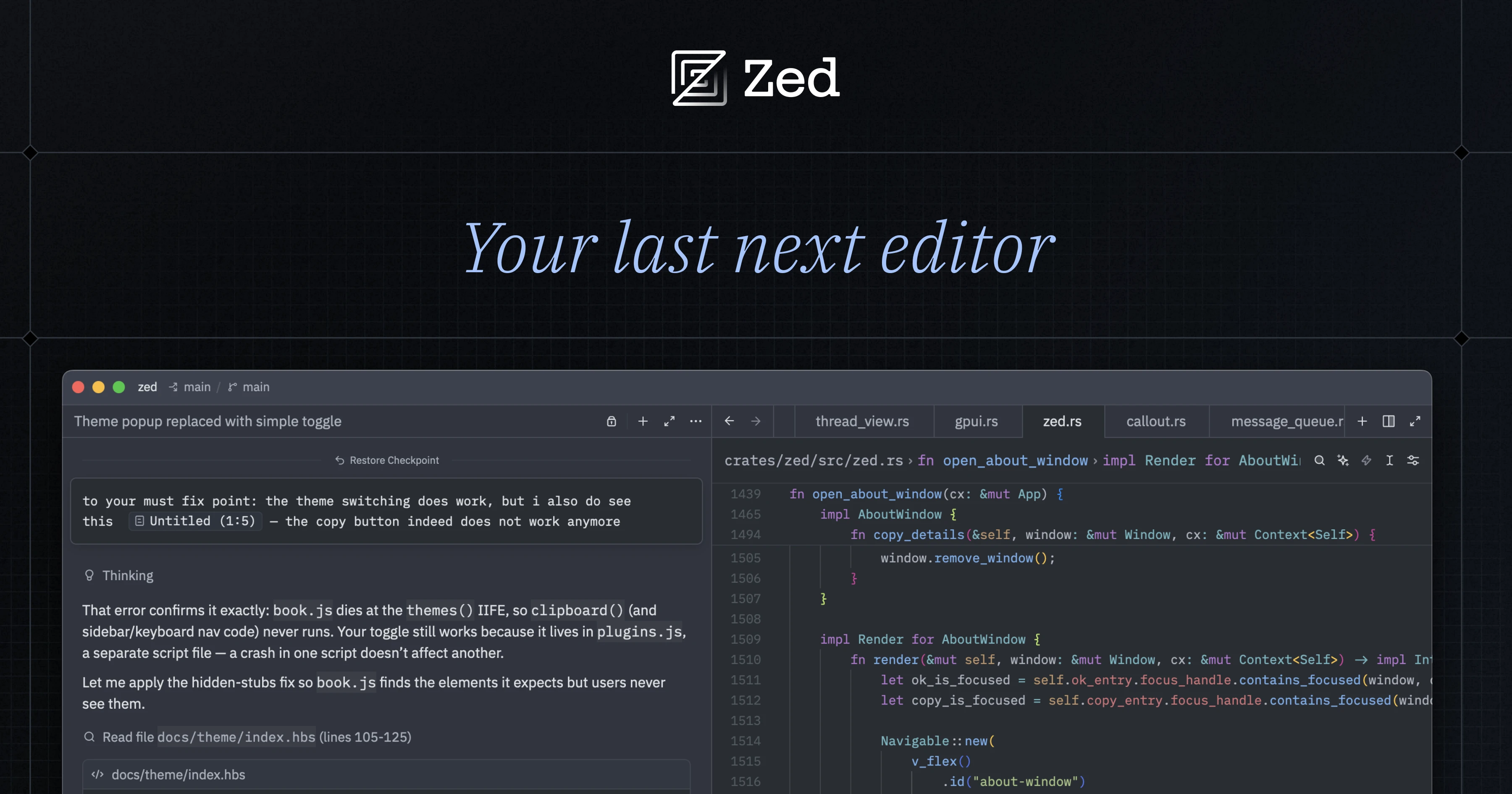

Zed 1.29.3 corrects how reusable system guidance is packaged in OpenAI requests for GPT-6.2 and later models. The November 20 patch also fixes Text Finder showing results from a previous query when a new search has no matches.
The release links a stable-branch patch that moves persistent guidance into a leading developer-role input message. It retains that message when replaying a provider-native compaction window rather than rewriting the compacted items themselves.
Where instructions sit affects cache reuse
OpenAI's current cache documentation explains that GPT-6.2 models append top-level instructions after input, beyond eligible cache boundaries. Repeated instruction tokens in that field remain uncached. Reusable guidance belongs in an initial developer message when cache eligibility is intended.
Zed's patch addresses that request representation. It is not a change to the model weights or an increase in the model's context limit. A correctly placed prefix can be eligible for reuse without establishing that every request will get a cache hit.
Our analysis: context handling has operational consequences
Compaction is usually discussed as a way to keep a long conversation manageable. The application also needs to preserve the instructions that apply to the next request while respecting the provider's representation of earlier context. Reconstructing one incorrectly can affect both behavior and caching.
This makes request-level inspection valuable. An application can display the same conversation to a user while serializing it differently underneath. The change is therefore worth understanding even when the visible interface looks unchanged.
The contributor reports a 98.4 percent input-token cache rate on the final request of a local test and successful reuse on four compaction follow-ups. Those are the contributor's observations, not our measurements or a forecast for a reader's bill. Actual outcomes depend on the conversation, provider settings and cache behavior.
Source licensing and testing boundaries
Zed's versioned licensing notice describes the source as primarily GPL-3.0-or-later, with Apache-2.0 components where marked. The editor's source terms should be distinguished from external model services and their charges.
Our repository profile now records that verified distinction. We read the patch and its tests but did not install Zed, submit an API request or reproduce the reported cache rate. The update is a targeted correctness and efficiency repair, not an independent endorsement of every AI workflow in the editor.
EXPLORE THE SOURCE
Projects in this story
GitHub repositories
- zed-industries/zed ↗View project details
Original source and implementation review with labeled editorial analysis. No model inference, installation, paid service, API benchmark or independent security/robotics test performed.