
Unsloth's v0.1.925-beta release includes a small but consequential fix for local coding conversations near their context limit: a tool's failure status survives even when there is no room to return its full output to the model.
The included November 25 change concerns an already-executed terminal or Python call. Previously, replacing a long result with an omitted-output notice could also replace the leading exit-code line. The model could receive the same-looking notice after a successful operation and a failed one.
Keep the status when the body cannot fit
The tagged truncation helper now checks for a leading status line when the available output limit is zero or below. If it finds one, it prefixes that line to the short notice.
For example, a long failed result beginning with Exit code 3: retains that status before the omitted-output message. In the tool's existing convention, a successful result has no corresponding failure prefix, so its notice remains unchanged. A sufficiently short original result is kept rather than replaced by a longer notice.
The implementation matches a particular leading exit-code format, including signed integer codes. It is not a claim that every tool or every kind of failure is automatically understood. The change preserves an existing piece of evidence rather than interpreting what the program should have accomplished.
This is after execution, not permission to execute
The timing matters. The call has already run when its result reaches this path. Keeping the status helps the model decide what to do next; it does not retroactively prevent an unsafe or unwanted command.
The pull request says pre-dispatch refusal, compaction rescue, notices for starved results and the existing spill-file behavior are unchanged. It also says the additional status tokens fit within the notice reserve held by the pre-dispatch gate. This is not an enlarged model context window or a switch that bypasses approval controls.
Our analysis
Context management should preserve the information needed to reason about actions, not only shorten their text. An exit code is a compact example: losing it can encourage a repeated operation or a misleading assumption that a missing error body means success. Preserving it still leaves the assistant responsible for checking the intended result.
The release contains many training, export and application changes. We isolated this behavior using the exact tagged source and its included commit rather than assigning every inherited release-note claim to a new patch. The maintainers report regression tests; we did not run them or exercise a live Unsloth session.
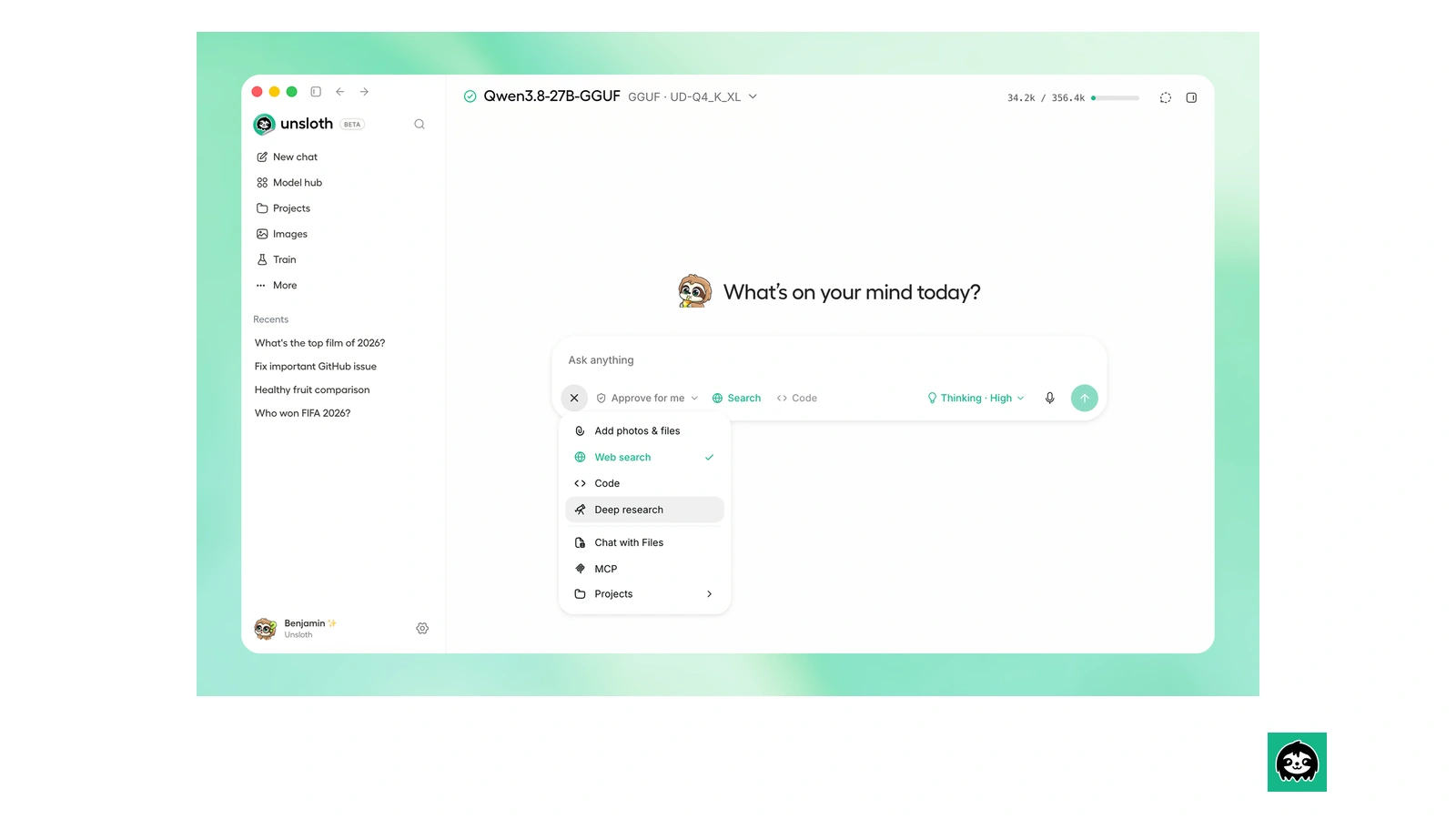
Our existing Unsloth repository profile links the Apache 2.0 project source; model and service terms are separate. The credited product screenshot is broader application context showing a Qwen conversation setup, not a screenshot of this fix or a local test.
EXPLORE THE SOURCE
Projects in this story
GitHub repositories
- unslothai/unsloth ↗View project details
Original primary-source review. No model weights/data downloaded, speech or upstream tests executed, software installed, server changed or benchmark independently reproduced.