Kilo's November 27 repository release includes a change to how permission requests display text that would otherwise have no visible width. Descriptions, paths, commands and diff file names can now expose control and formatting characters as readable escape sequences.
This release groups changes from multiple clients and package versions. The repository tag is the source snapshot reviewed here, rather than a claim that every installed Kilo client reports the same version number.
Make the request legible before approval
The included permission-display change uses a common rule for request-bearing text. Ordinary characters retain their visible form; covered controls and invisible formatting characters are displayed as literal escapes. Supplementary Unicode codepoints are handled as codepoints rather than displayed as unrelated surrogate halves.
Single-line fields and block fields differ deliberately. The block helper preserves real line feeds so multi-line commands and formatted input remain readable, while escaping the other covered characters. The tagged implementation also has corresponding display handling for the CLI and JetBrains client.
The goal is inspectability, not an assumption that an invisible character proves malicious intent. Some of these characters are normal parts of emoji presentation or writing systems. Joiners used in Persian and Indic text can therefore become visible escape text too, which is a real readability tradeoff for international users.
The displayed form is not the executed form
The change separates display text from the raw command used by the copy control. Copying can preserve the request's original characters rather than silently substituting the escaped presentation. That makes the approval surface more informative without pretending the operation itself has been rewritten.
It also leaves an important boundary: a clearer permission card does not establish that the command is safe, permitted or useful. The approve/deny policy, command execution and underlying tool behavior are separate concerns.
The pull request explicitly excludes several surfaces, including the shared diff body and saved-pattern rows in the settings editor. This should not be described as sanitization of every string throughout the application.
Our analysis
Permission interfaces are evidence interfaces. If two requests look the same while containing different characters, a user can be asked to approve something they cannot meaningfully distinguish. Making those differences visible helps review, provided the interface also makes clear what copying and execution will use.
The maintainers describe browser-DOM checks and tests keeping the covered Unicode sets aligned between clients. We inspected the tagged helper code and included change rather than reproducing those tests or exercising a live permission prompt.
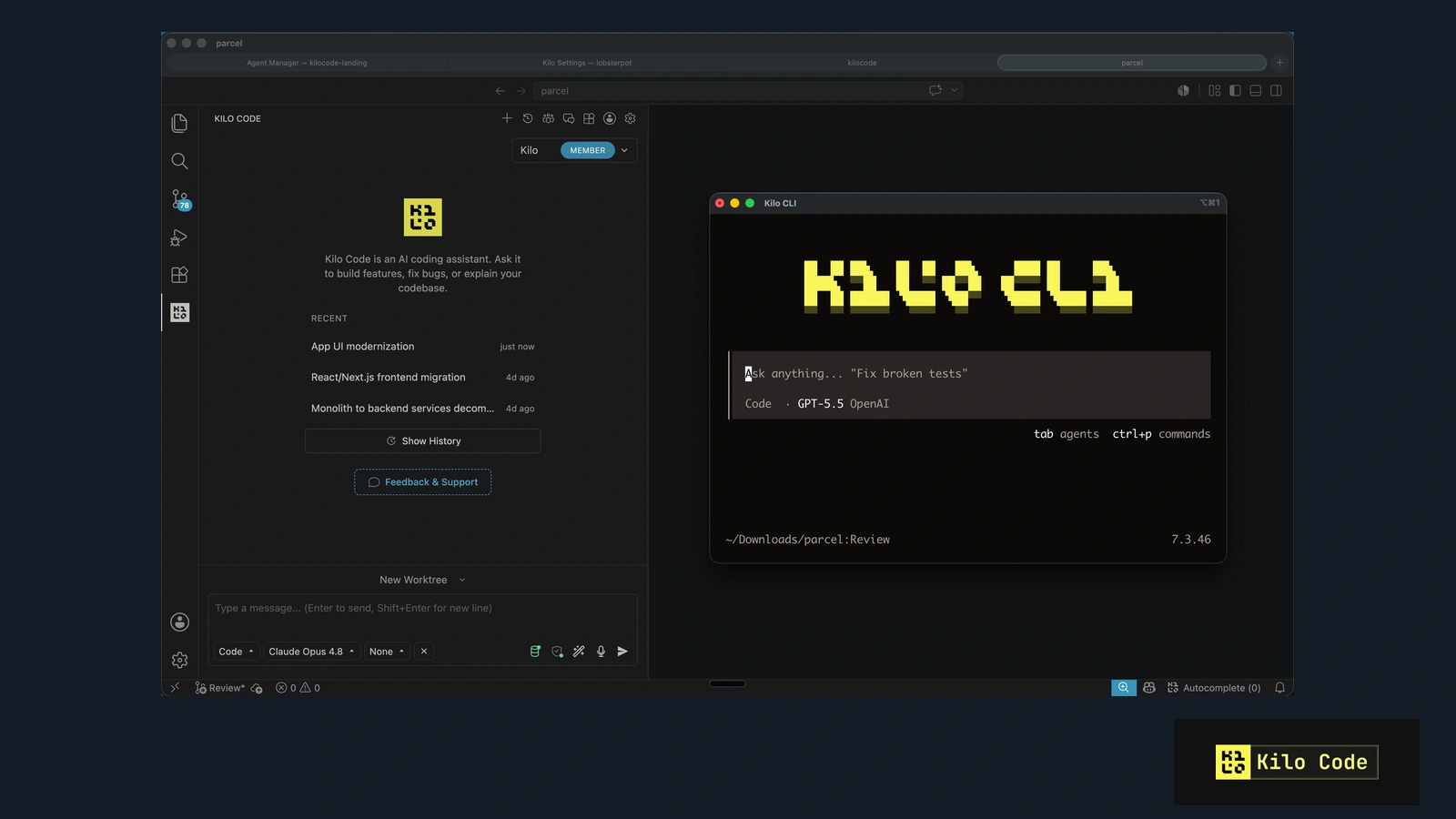
Our new Kilo repository profile links the source and its MIT root license. Connected model services retain their own terms. The credited repository screenshot is a general product illustration showing an older client view; it is not a screenshot of our test or proof of this release's behavior.
EXPLORE THE SOURCE
Projects in this story
GitHub repositories
- Kilo-Org/kilocode ↗View project details
Original primary-source review; no weights/datasets downloaded, models or upstream tests executed, compiler/extension/cloud installed or workload benchmarked. Results are publisher/researcher claims, not independent measurements.