
Google's Tunix 0.1.8 moves its distributed reinforcement-learning framework out of the experimental namespace and expands its training, rollout and observability infrastructure. The November 19 release also highlights work on matching the numerical behavior of sampling and training, alongside API changes that existing users need to review.
The versioned release notes rename RLCluster to RLEngine and graduate distributed modules to tunix.dist_rl. They remove sglang_jax rollout support, leaving vanilla variants and vLLM as supported rollout backends. This is a training-library release, not a new foundation checkpoint.
The same weights can still produce different numbers
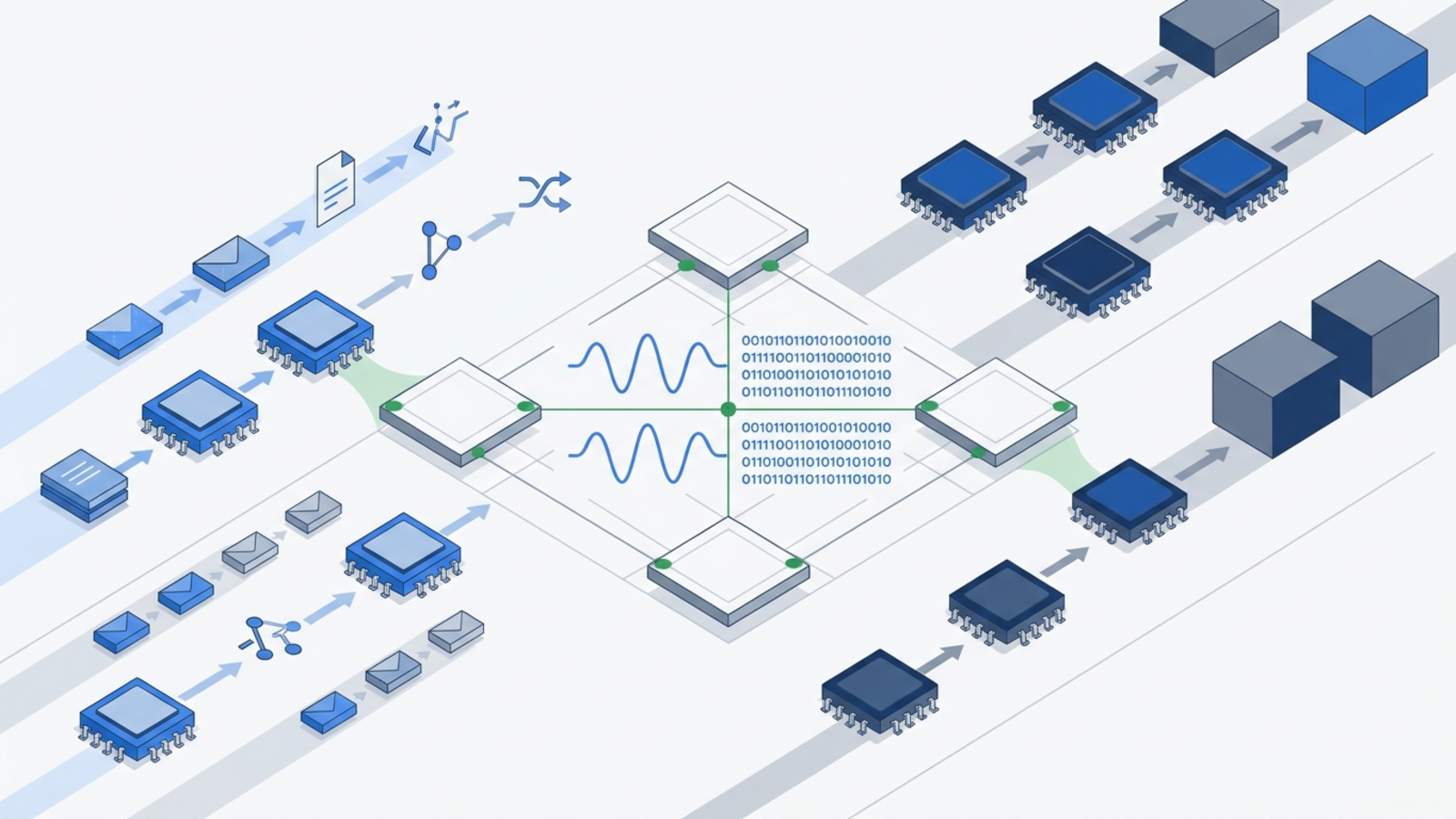
Google's November 16 technical explanation describes how sampling and batched training can assign slightly different token probabilities even with identical model weights. Different arithmetic paths and floating-point reduction order can introduce a numerical gap.
The Zero-TIM work defines a precise contract: sampled-action log probabilities agree bit for bit across decoding, serving prefill and the training forward pass under the same inputs and rollout weights. Google reports verifying this on a 64-chip TPU v5p setup, using a 200-step synthetic FrozenLake experiment.
Those are publisher results. The comparison uses single-seed runs and a specific test environment; it does not establish that every training task, architecture or accelerator will converge reliably. We have not run the numerical checks.
Our analysis: correctness and convergence are different claims
Removing an unintended numerical difference makes a system easier to reason about. It allows researchers to examine the intended learning algorithm without silently combining it with a different probability calculation in another execution path.
That does not solve every problem in reinforcement learning. Task quality, reward design and the surrounding experiment still determine what the model is encouraged to learn. A bit-exact implementation can faithfully optimize a poorly chosen objective.
The release's namespace and backend changes matter for reproducibility too. Reusing an old configuration without checking the new API can produce a different experiment or fail before training starts. A pinned source version and explicit runtime settings are more useful than a broad assertion that a recipe supports the latest library.
Code and older official background
Tunix's versioned source license is Apache-2.0. Our repository profile links the project and its documented requirements. No accelerators were rented or software installed for this report.
The video below is an official Google for Developers introduction published September 30, 2025. It explains the broader Tunix workflow; it predates 0.1.8 and does not demonstrate this release's new features.
EXPLORE THE SOURCE
Projects in this story
GitHub repositories
- google/tunix ↗View project details
Original primary-source reporting and labeled analysis. No model inference, installation, API submission, hardware test or independent benchmark performed.