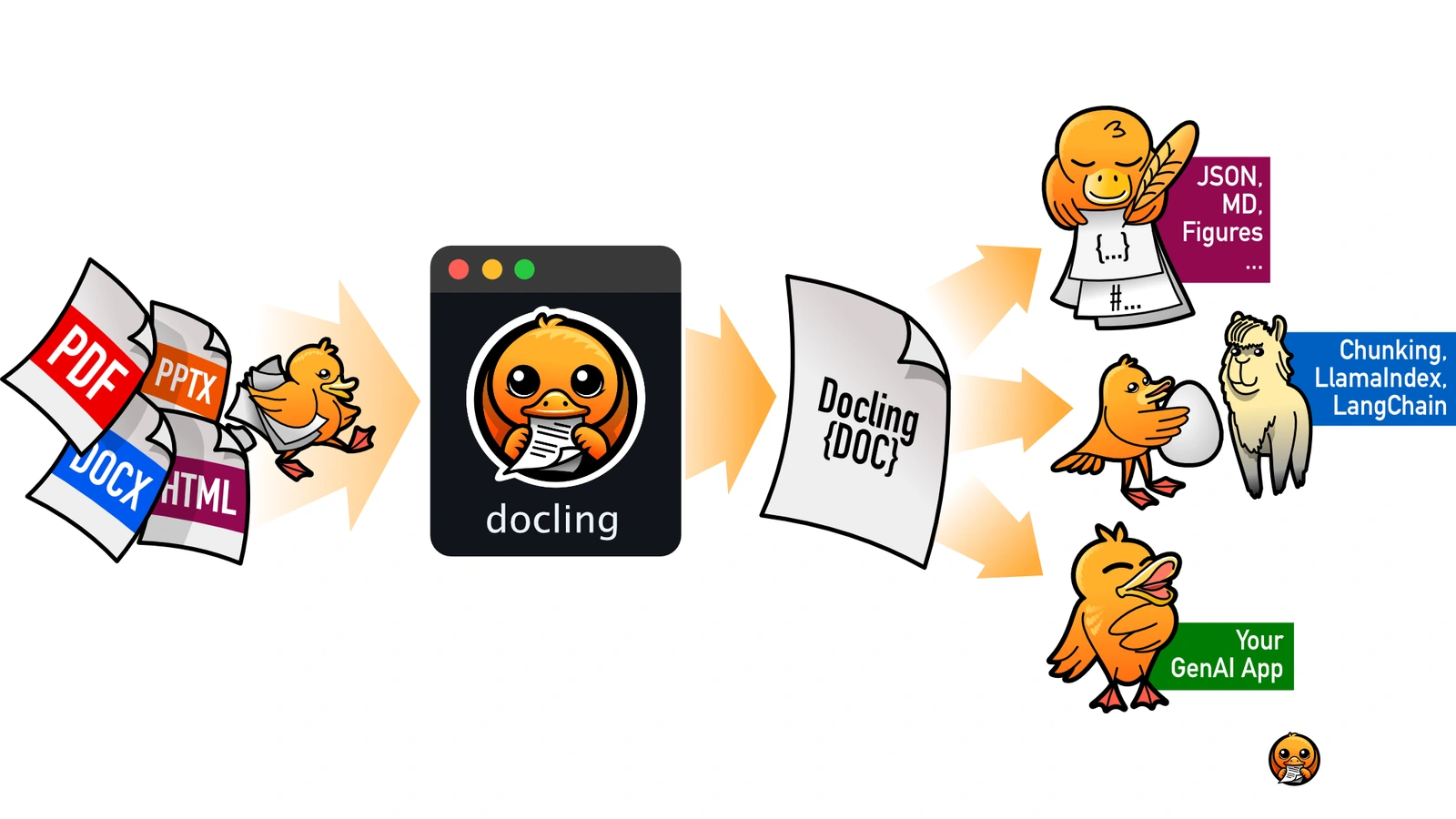

Docling 2.154.0, released November 26, changes several boundaries around document conversion: where remote requests go, how configuration is loaded and how much a generic ZIP input may expand. These are specific controls, rather than a blanket claim that every conversion is local or every document is safe.
An env file is now an explicit input
The remote CLI change stops automatically searching the working directory and its parents for an env file. The command reads one only when requested through its named-file or dotenv option, taking just the service URL and service API-key settings without variable expansion.
Explicit command options and real environment variables take precedence over the selected file. Other Docling commands do not acquire automatic env-file loading through this path. The service address and its configuration source are reported before a document is sent.
That makes endpoint selection more visible; it does not make a selected remote service trusted. A reader still needs to know which server is receiving the document and what that server does with it. We did not load a local env file, inspect credentials or submit a document.
Self-hosted OCR presets should point to a self-hosted service
A separate preset correction changes the Unlimited-OCR presets to the generic API engine, whose default address is local. Previously their default OpenAI engine could fall back to the provider address when no URL was supplied.
The release's model-catalog documentation identifies the generic default as a localhost OpenAI-compatible chat-completions endpoint. That does not start a compatible OCR server, install its model or show that an arbitrary service already using that port supports these models. The SDK remains the place to configure another API URL in the documented setup.
Generic ZIP inputs get finite budgets
The generic ZIP change adds defaults of 256 MiB per member, 1 GiB expanded size and 10,000 members, alongside the existing file-size limit. A lower file-size limit still applies.
The described failure modes differ: a member exceeding a size policy can be rejected while other members continue converting, whereas too many members reject the archive as a whole. This is not a claim that every nested document format shares identical accounting or that an archive cannot consume other resources.
Our analysis: the common theme is making implicit inputs explicit. A conversion pipeline's output may look like ordinary text while its execution depends on a service address, inherited configuration and compressed input. Those choices belong in an integration's review, not merely in a model-accuracy comparison.
Docling's reviewed source is MIT-licensed; model artifacts and services have their own terms. Our repository profile links the project. We inspected the release and merged changes, including regression coverage, without executing the converter, opening an archive or testing an OCR endpoint.
EXPLORE THE SOURCE
Projects in this story
GitHub repositories
- docling-project/docling ↗View project details
Original source-reviewed reporting. No software installed, model weights or datasets downloaded, inference, upstream tests, security audit, hardware qualification or cloud deployments performed.