A sampler's firmware, a professional photo editor, an engineering workstation and a PlayStation may seem like unrelated products. They share a question that is becoming harder to ignore: what happens when the people who depend on a tool can also study it, extend it or build an alternative?
Recent music-hardware source releases are one part of the answer. Elsewhere, projects are building open creative and CAD tools, emulator teams are studying console compatibility, and AI agents have gained new tools for investigating software behavior. These are not all the same kind of openness, and not every project uses reverse engineering or AI. Together, however, they illustrate a change in who can participate in shaping software.
Our assessment is that lower barriers to investigation and implementation can put pressure on established platforms to offer better access, interoperability and value. That is an interpretation of a broader trend, not proof that a particular company's decision was caused by a rival or by AI. This feature was researched November 8, 2026.
Three different ways a product can become more open
A manufacturer can publish source itself. A community can independently create a compatible implementation from documentation and observed behavior. Researchers can also analyze a program or system to understand how it works. The words open source, reverse engineering, emulation and AI-assisted development describe different things. A public GitHub repository does not automatically establish a project's permissions, completeness or quality.
That matters in music hardware. Music Tribe's KICK repository publishes application, audio-engine and hardware-protocol code. Its IGNITE repository also publishes substantial code, but says some non-redistributable materials are omitted and no official firmware is available there yet. In contrast, inMusic's MPC repository describes Linux-environment open-source components distributed for license compliance; it does not establish that the full MPC application is open source.
There are more examples: Erica Synths' LXR-02 firmware, M-VAVE's FM1 Open project and Synthstrom's Deluge firmware. Each has its own code, dependencies and license conditions. Polyend's Tracker Community Edition combines source access with a wholesale commercial clone restriction and separate terms for some binary libraries. These cases should not be flattened into one label.
Our companion MPC and KICK report examines those releases and their limits in more detail.
Photoshop alternatives: an idea, not instant parity
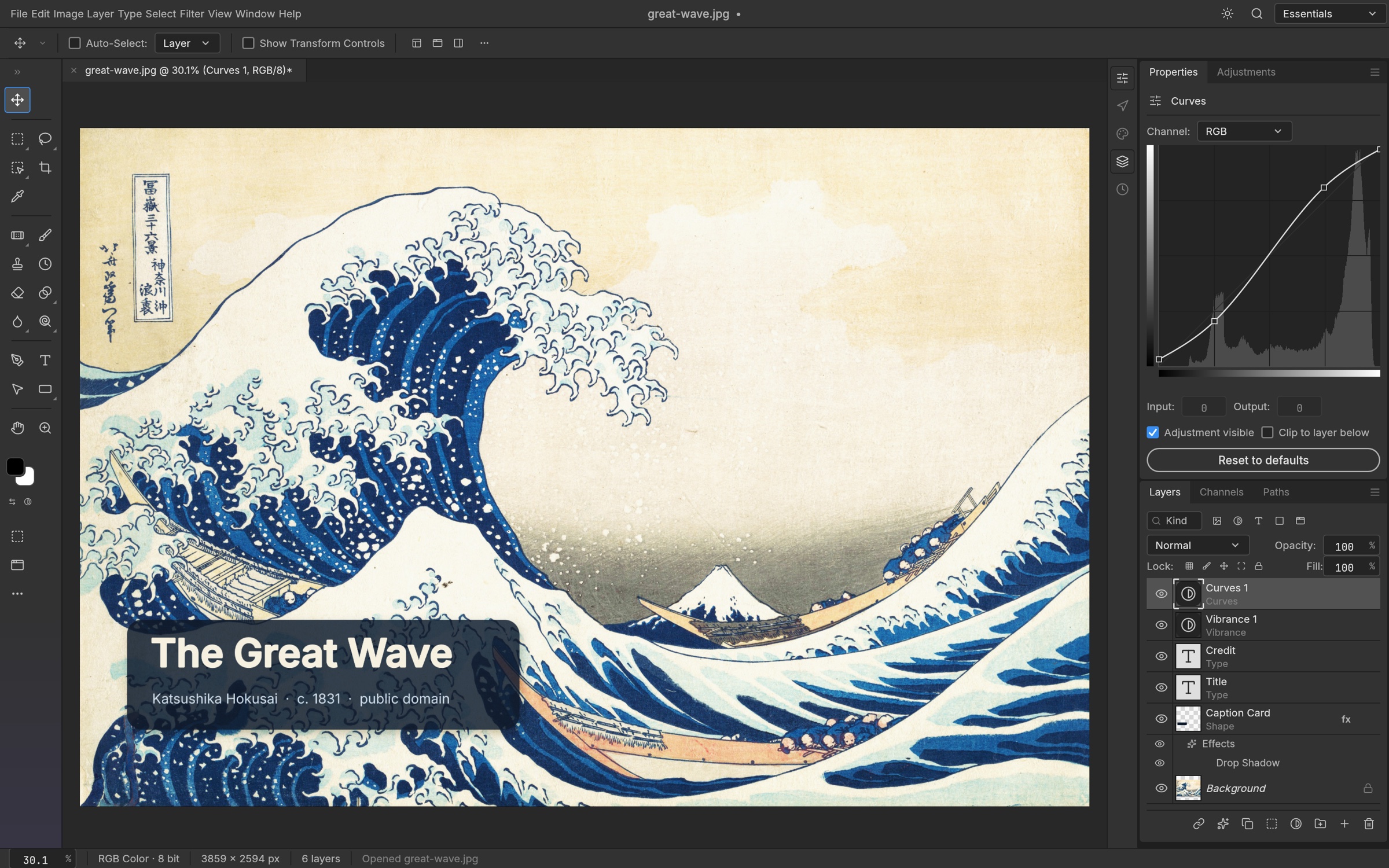
PhotoCraft is an open-source photo editor written in Rust. Its developers describe a clean-room approach based on public specifications and observed behavior. They also describe layers, masks and PSD support. Those are project claims; we have not independently audited the development process or tested file compatibility for this article.
Just as important, the project's own README calls PhotoCraft an early alpha and says it is not yet a replacement for daily professional Photoshop work. It identifies gaps in AI and generative features, tools, typography and plugin compatibility. A familiar-looking interface and a list of connected menu commands cannot establish that a complex project will open, render and export correctly.
Independent projects such as GIMP have been developing open image editing for years; GIMP 3.0 added non-destructive editing for commonly used filters. This movement did not begin with today's coding agents. AI can change the speed and accessibility of some work, but durable alternatives still depend on maintainers, file-format testing, accessibility and users who report what breaks.
CAD is a tougher test than a demo
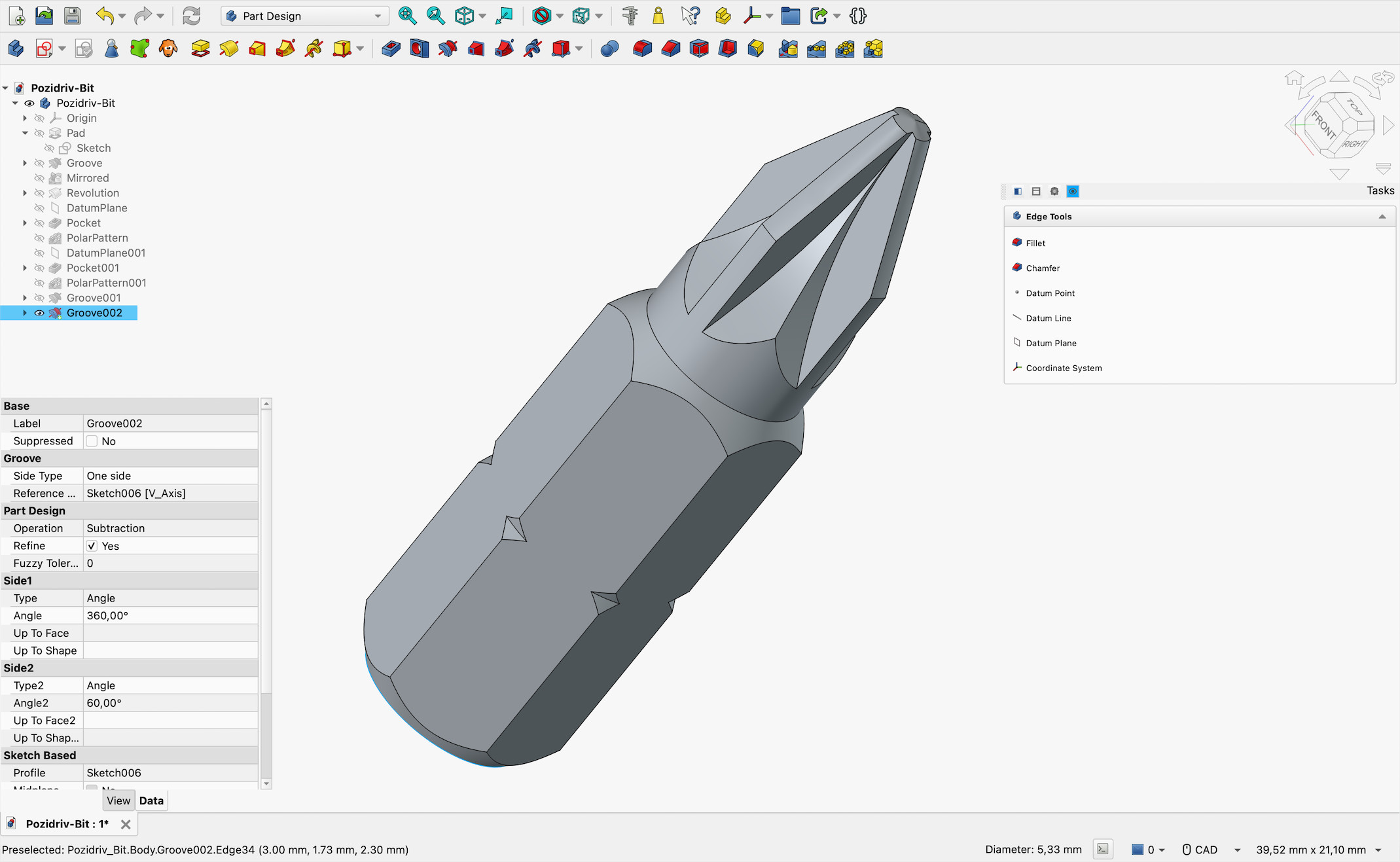
Engineering software raises the stakes. FreeCAD is an established open-source parametric modeler. SolidCraft is a newer Rust-based parametric CAD project whose developers describe desktop, web and MCP-driven workflows. The SolidCraft project says it is independent and designs behavior from public documentation, general CAD conventions and user feedback; we are not claiming it used REA or copied a commercial application's source.
Making a box, a sketch and an extrusion is a useful beginning. A professional CAD workflow also depends on precise constraints, dependable boundary representations, assemblies, drawing standards and exchange formats. An imported model that looks right can still have an invalid topology or an edit history that does not survive a change. For these tools, meaningful competition means independently checking dimensions, tolerances and file round trips—not just comparing screenshots.
PlayStation: preservation, compatibility and boundaries
Console communities have explored compatibility for decades. PCSX2 is an open-source PlayStation 2 emulator; more recently, KytyPS5 has described an evolving PS5 translation layer. KytyPS5 says it is independent of Sony, does not distribute games or copyrighted system software, and that compatibility and performance vary by build. Its public claims are not a guarantee that a particular game works, and we have not tested it.
These community projects do not mean Sony has open-sourced PlayStation. They illustrate the demand for preservation, experimentation and access on different hardware, alongside disputes about authorization, intellectual property and distribution. Sony's software terms contain restrictions on reverse engineering subject to applicable law. Those terms and legal exceptions vary with the jurisdiction and facts; a tool's open-source license is not itself permission to copy someone else's game or assets.
What REA and AI agents add
Reverse Engineer Anything (REA) connects coding agents to analysis tools through MCP. Its maintainers describe workflows for native binaries, applications and runtime behavior, with findings that can help an agent investigate and test an implementation. Native analysis can depend on separate tools such as Ghidra or IDA. REA is an investigation toolkit; it is not a guarantee that an output is correct, complete, independently created or lawful to distribute.
An agent can help a developer navigate unfamiliar code and generate test cases, but it can also produce convincing wrong answers. A credible project needs reproducible observations, provenance for its code and assets, reviewers who understand the system, and test cases that catch behavior mismatches. A public repository and a permissive license label cannot, on their own, prove the origin of every contribution.
Faster AI-generated contributions also increase review work. The question for maintainers is not simply whether a patch was typed by a human; it is whether its author can explain it, provide evidence, respect project policy and take responsibility for fixes. In compatibility work, the provenance of information matters as much as whether a build passes.
Why the pressure is real—and what remains unproven
Our view: when communities can demonstrate an alternative or a useful modification, companies face a more concrete challenge. Users can ask for better file access, documented extensions, longer support and a route away from a tool that no longer serves them. The prospect of competition may change incentives. But this article does not establish that reverse engineering or a competitor forced any named company to release code.
Openness also has costs that a launch announcement rarely settles: maintainers need time, security reports need responses, firmware needs recovery, and creative professionals need confidence that their files will open next year. For the people making music, editing images, designing parts or preserving games, the best outcome is not a race to label everything open. It is a choice of tools whose capabilities, limits, licenses and long-term support are clear.
EXPLORE THE SOURCE
Projects in this story
GitHub repositories
- MusicTribeOpenSource/0700-AAM ↗View project details
- erica-synths/lxr-desktop-app ↗View project details
- inmusic-software/az0x-open-source ↗View project details
- MusicTribeOpenSource/0716-AAF ↗View project details
- polyend/tracker-ce ↗View project details
- m-vave/fm1_open ↗View project details
- SynthstromAudible/DelugeFirmware ↗View project details
- morluto/rea ↗View project details
- storytold/photocraft ↗View project details
- tangency-labs/solidcraft ↗View project details
- PCSX2/pcsx2 ↗View project details
- KytyPS5/KytyPS5 ↗View project details
Original reporting and editorial analysis. Project statements are attributed; no featured applications or firmware were independently tested for this article.