
FastMCP 4.2.6 adds an experimental client-side CodeMode wrapper, allowing an agent to discover and compose remote tools without requiring each server to run CodeMode itself. The release timestamp is November 25 UTC, or November 24 in Pacific time. This is our later review of the update.
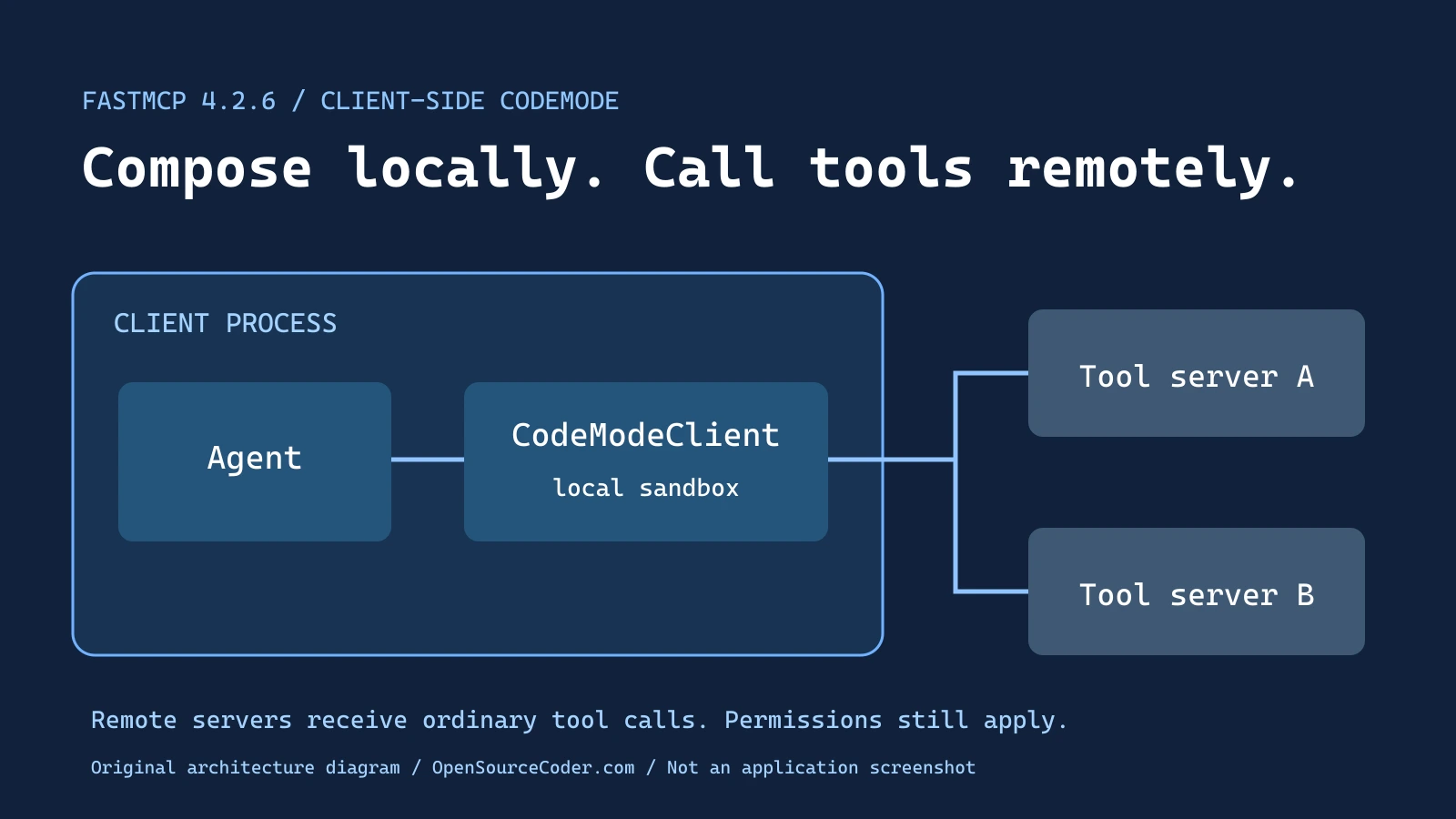
The new CodeModeClient wraps either a Client or a ClientGroup. Its exposed meta-tools provide discovery and execution; a generated code block can call tools from multiple underlying servers using the group’s namespaced tool names. Remote servers receive ordinary tool-call requests, not the generated program itself.
Where execution actually happens
The exact tagged implementation describes the sandbox as local to the client process. It uses Monty by default and requires the code-mode extra for that provider. This is different from installing a new execution feature on every connected server.
The constructor defaults to a limit of 50 tool invocations per execution block. That is a configurable count, not a substitute for the underlying tools’ authorization, a transaction boundary or a guarantee that remote side effects can be undone. The implementation explicitly marks the module experimental and subject to change without deprecation.
Two upgrade details deserve attention
The release removes Authlib from FastMCP’s own dependencies because its client and server no longer use it. Applications that import Authlib directly need to declare that dependency themselves. A package being available transitively before an upgrade is not the same as an application owning its dependency declaration.
Experimental events also move out of the former module into fastmcp-events with a revised API. The release explains the move from check functions to event models and readers or explicit emission. Users of that experimental extension need to review their imports and integration rather than assuming a patch-version update preserves the old interface.
Other fixes include namespacing resource links returned by mounted tools and keeping response-limited results within the configured size after serialization. These are specific release-note corrections, not proof that every downstream client or transport now behaves identically.
Our analysis: moving composition to the client is useful when an application talks to servers it does not control. It also makes execution placement important to document: generated code runs in one place, while the operations it triggers may affect several others. Clear permissions and failure handling remain application responsibilities.
The FastMCP repository profile links the Apache 2.0 project. We reviewed the release and tagged client implementation. We did not install the new packages, run a sandbox or issue remote tool calls through this feature.
EXPLORE THE SOURCE
Projects in this story
GitHub repositories
- PrefectHQ/fastmcp ↗View project details
Independently source-reviewed original reporting. Publisher evaluations are attributed; no installation, inference or local benchmark was performed.