OpenCode 2.3.0 changes the behavior of its coding-agent subagents: they now return immediately, continue in the background and report to their parent when idle. The November 13 release notes say the change lets a parent session keep working while multiple subagents run.
That can make parallel research and coding tasks easier to coordinate, but it also makes it important to distinguish a preliminary report from finished work. The release notes say a subagent report now identifies when its own background work is still running, so the parent can wait for a final report.
A quieter terminal and faster navigation
The terminal interface now groups runs of tool calls and thoughts into collapsible activity rows by default. Existing verbosity settings are retained, and users can select medium or high verbosity to see more detail. In the desktop app, a new Jump to message command searches prompts in the current session; the notes list Ctrl+Alt+G on Windows and Linux and Cmd+Alt+G on macOS.
Other changes include experimental Model Context Protocol event support behind a flag and provider-side client certificates for gateways that require mutual TLS. An experimental flag can move shell commands into the background when a timeout expires. These are optional features with their own configuration and operational implications.
What to check before adopting it
OpenCode is an MIT-licensed project; its OpenSourceCoder.com repository profile links to the upstream source. Model providers, credentials and agent permissions remain separate decisions. Background execution changes when results arrive, so teams using automation should review assumptions in their workflows and test upgrades on a representative task.
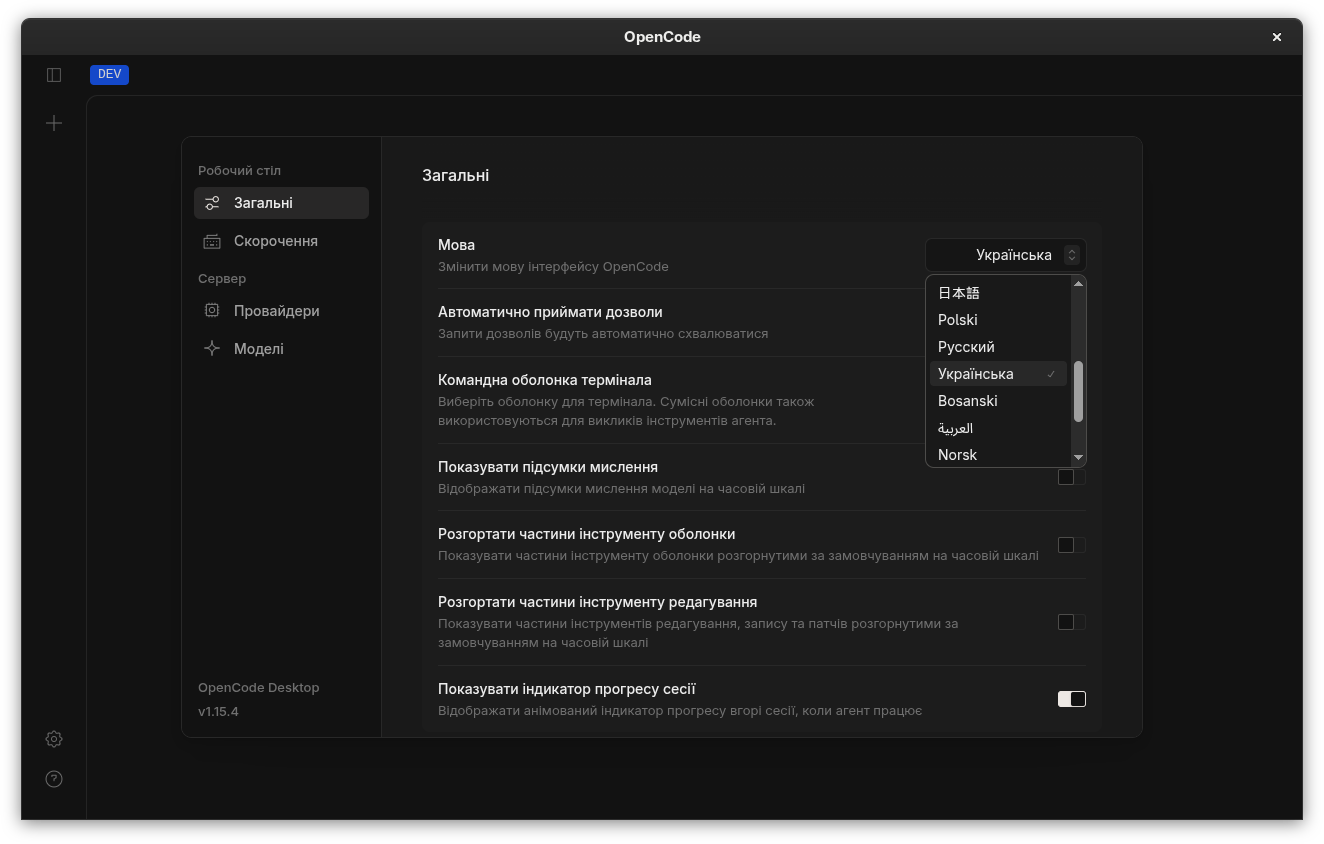
The image is an earlier screenshot from the project repository, provided as background rather than a demonstration of the new version. We have not installed or independently tested OpenCode 2.3.0.
EXPLORE THE SOURCE
Projects in this story
GitHub repositories
- anomalyco/opencode ↗View project details
Original reporting from linked project documentation; no independent installation or test.